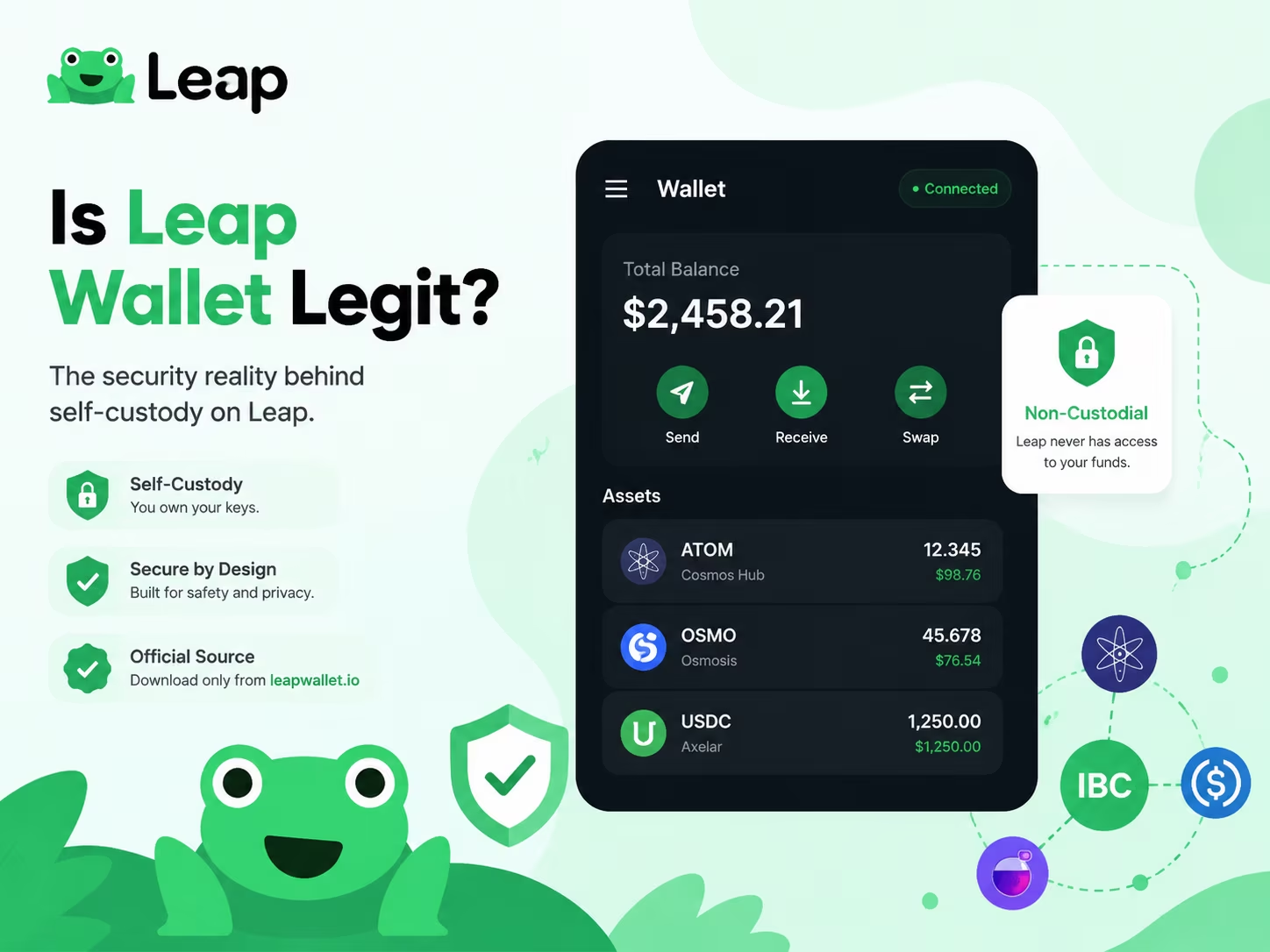
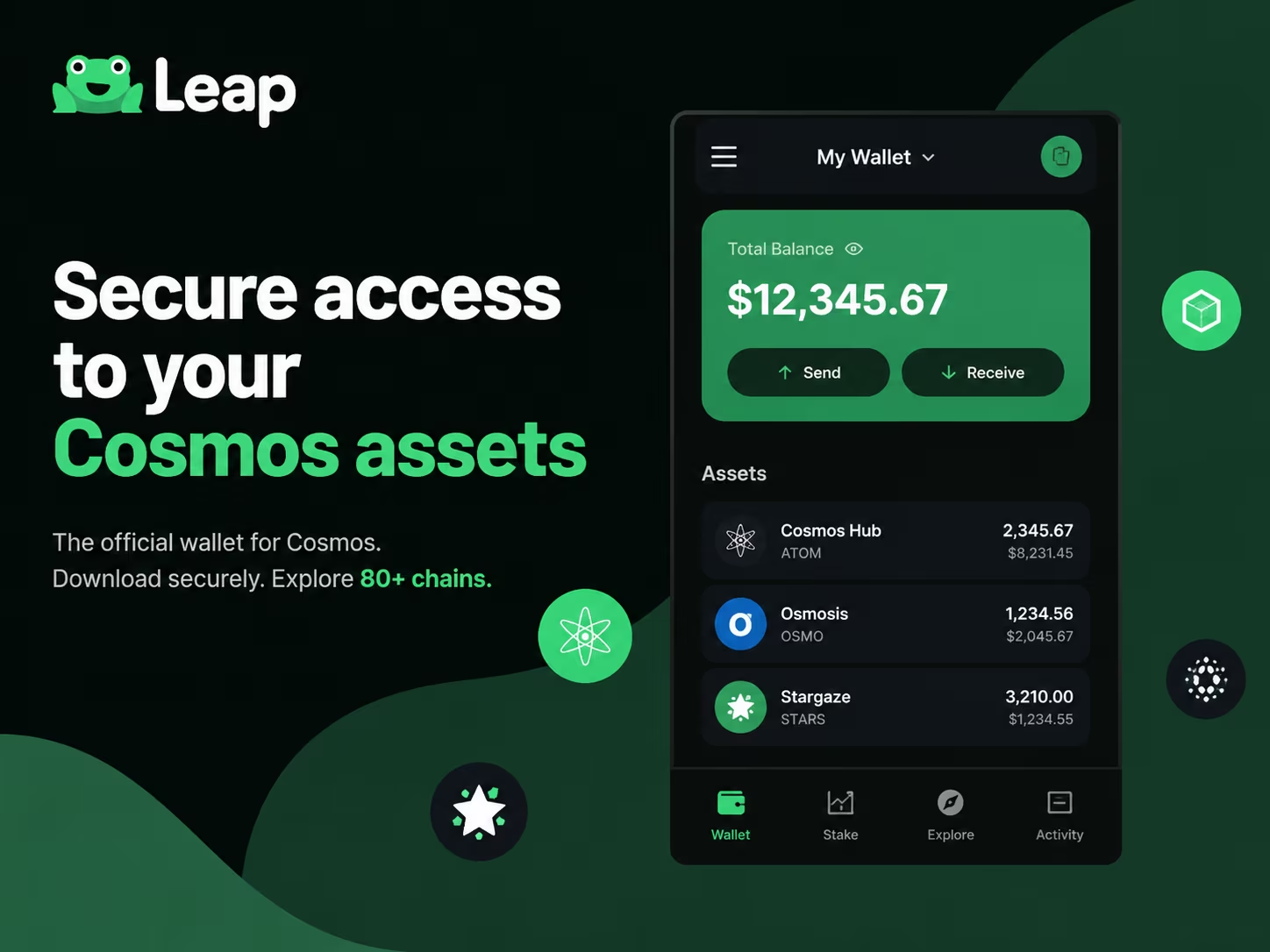
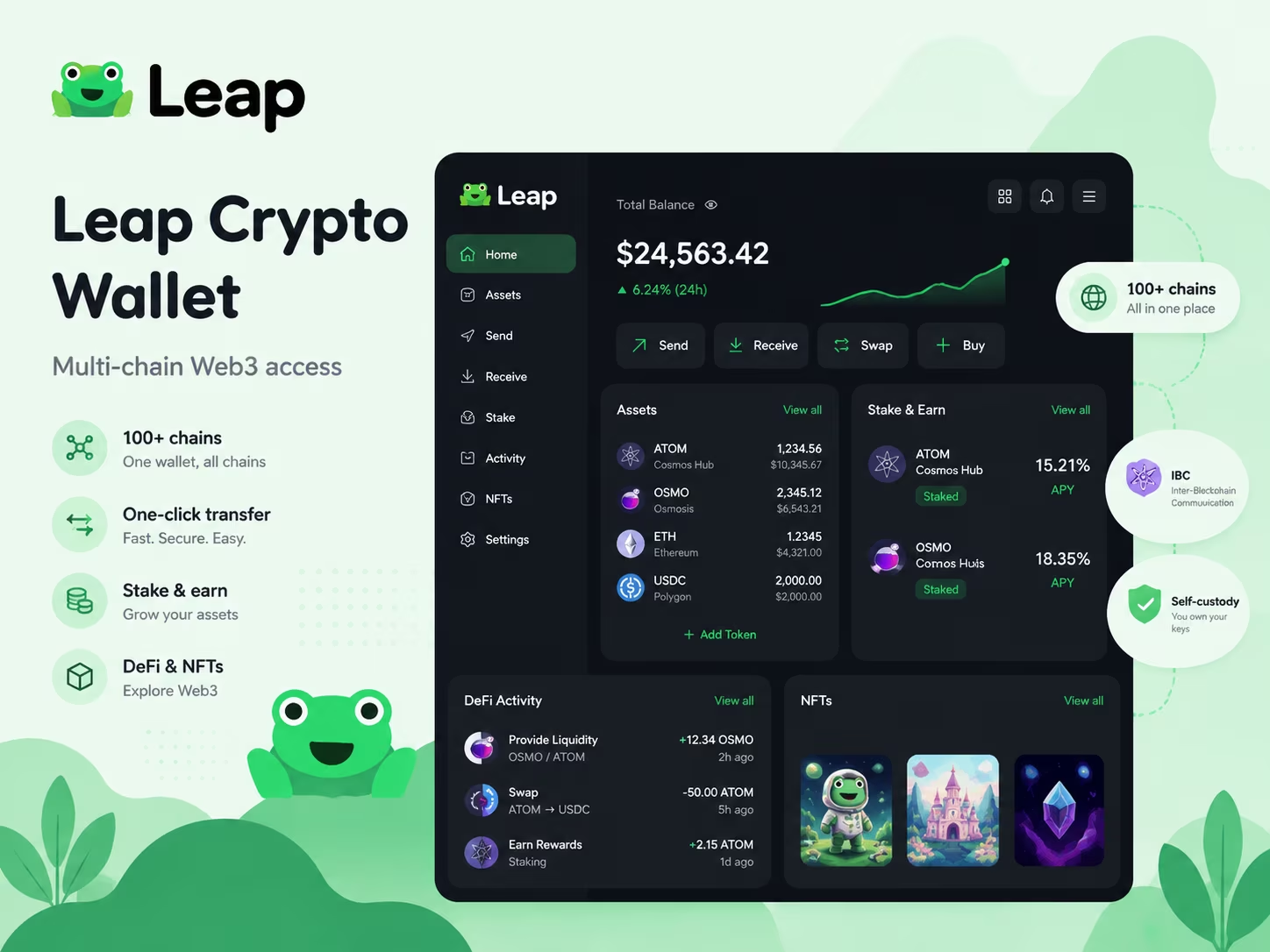
Overview
- Verified Domain: leap-app.io
- Average Phishing Loss: $2,764 per incident
- Security Trend: Multi-point verification (GitHub/Discord)
- Recommended Protection: Hardware wallet integration (Ledger/Trezor)
You must use the leap wallet official site at leap-app.io to safeguard your digital assets from sophisticated phishing and SEO hijacking. With crypto scams draining billions annually, manually typing the URL and verifying SSL certificates is your primary defense. Avoid search engine ads and third-party links to ensure you are downloading authentic, non-custodial software for the Cosmos ecosystem.
Checklist to Verify the Real Leap Wallet Website
In the 2026 Web3 landscape, phishing attacks have become highly automated, often using AI-generated clones of popular interfaces. To protect your assets, you must verify the entry point before interacting with any smart contracts or downloading software. Use this checklist to ensure you are on the legitimate Leap Wallet System portal.
- Inspect the domain spelling. Scammers often use typosquatting, such as lcapwallet or leapwallet.co. The only official domain is leap-app.io. Double-check every character in the address bar before entering any sensitive data.
- Verify the HTTPS certificate. Click the lock icon in your browser. While HTTPS is standard, a missing certificate or a recently issued one for a major project is a massive red flag.
- Use official outbound links. Instead of searching on Google where sponsored ads often lead to drainers, access the site via official social media profiles like X (Twitter) or the project's verified Discord. This is a core part of Leap Wallet phishing protection.
- Check app store routing. If you are downloading the mobile app or browser extension, ensure the website redirects you to the official stores (Apple App Store, Google Play, or Chrome Web Store) with high download counts and established developer history.
- Bookmark the verified URL. Once you have confirmed the site is authentic, save it to your browser bookmarks. This eliminates the risk of clicking a malicious link in the future.
Official vs Suspicious Signals When Checking Leap Wallet Links
Identifying the authentic Leap Wallet site is your first line of defense in the Web3 ecosystem. Phishing tactics have evolved in 2026, using sophisticated domain spoofing and social engineering to mimic official interfaces. Use this comparison to verify you are interacting with the legitimate platform before connecting your assets or downloading software. For a deeper dive into protection layers, check our Leap Wallet safety guide.
| Feature | Official Signal | Suspicious Red Flag |
|---|---|---|
| leap-app.io | Misspellings (e.g., leap-wallet.io) | |
| Security Protocol | Active HTTPS Encryption | Broken certificates or HTTP only |
| Download Source | Direct from official site | Third-party links or email attachments |
| Credential Requests | Never asks for Seed Phrase | Forms asking for Private Keys |
| Communication Tone | Professional and informative | Artificial urgency and poor grammar |
Why Search Results and Sponsored Ads Can Be Risky
Search engines are one of the most reliable delivery mechanisms for phishing attacks targeting crypto wallet users - and the mechanics behind this should change how you navigate the web entirely. Type "Leap Wallet download" or "Leap Wallet official site" into any search bar and what comes back is not a curated list of safe destinations. It is a ranked output optimized for engagement. SEO poisoning exploits exactly that gap: attackers deploy typosquatting, keyword stuffing, private link networks, and coordinated bot clicks to push fake sites up the rankings until a malicious clone sits right above the legitimate result. The goal is brutal in its simplicity - get you to click, install malware, or surrender your seed phrase before the penny drops.
Sponsored ads do not help. They make things worse. Malvertising campaigns run domain clones through Google Ads, dressed up as official sources. The ad looks clean. The URL looks close enough. And the psychological weight of "top result" handles the rest. As SecurityLab documents, techniques like artificial click boosting and private link networks exist specifically to elevate malicious sites mimicking legitimate ones - which makes any crypto wallet search a genuinely high-risk action. By 2026, these campaigns had evolved well past simple domain cloning. Attackers now replicate full UI layouts, button placement, font choices, everything. Visual inspection alone will not save you.
The fix, though, is not complicated. Stop using search results to reach your wallet. Direct URL entry and bookmarks bypass manipulated search outputs completely - no ranking games, no sponsored slots, no SEO tricks in the chain at all. Save the official address once from a verified source, bookmark it, and use only that bookmark going forward. For Leap Wallet phishing protection, the foundation is always the same: verify the official domain through a trusted channel first, not through whatever a search engine decides to surface on a given afternoon. This one habit kills the majority of wallet phishing incidents that hit otherwise careful users.
The deeper issue is about how trust actually works online. Search engines optimize for relevance and advertiser revenue - not for your security. Sponsored slots are paid placements, full stop. Anyone with a budget and bad intentions can buy them. Treating search results as a final answer rather than a starting point for verification is where most people go wrong. Bookmark the official Leap Wallet URL. Cross-check it against official social channels and documentation. Never install wallet software from a link inside an ad. That is not paranoia. That is just the baseline for navigating Web3 without getting burned.

Where the Official Site Should Lead You
The official Leap Wallet download page is your single verified gateway to every product resource - browser extensions, mobile apps, developer docs, and release notes - with zero third-party detours or sketchy mirror sites in between. When you land on the Leap Wallet System, the navigation is built with surgical clarity: extension installs route directly to verified browser store listings, mobile downloads point straight to App Store and Google Play, and documentation lives in its own dedicated section that tracks every product release. None of that is accidental. It is a deliberate UX decision that shrinks the attack surface for phishing and fake installer campaigns - and those campaigns have gotten frighteningly good in 2026.
For the official download flow to actually protect you, every link on that page needs to carry you somewhere you can verify on your own. Browser extension pages should show a publisher name that matches the official brand exactly, a review count consistent with a product used at scale, and a version number that lines up with the published changelog. Mobile listings should show the same consistency. If anything is off - one mismatched signal, one suspicious version gap - you are not on a verified route. Doesn't matter how polished the landing page looks. Visual cloning of wallet interfaces is trivially easy right now, which means the verification chain matters infinitely more than the aesthetics.
A well-built official site also routes you to update announcements and security advisories directly - no social media rabbit holes, no third-party aggregators required. Look for a changelog or blog section that documents version changes, new chain support, and security patches. Before you install or update anything, checking that section takes under sixty seconds. It tells you whether the version you are about to run is actually what the team shipped. For a full practical walkthrough of the installation sequence and what to audit at each step, the Leap Wallet setup guide covers it in granular detail.
The rule is blunt: bookmark the official domain directly, never reach it through search ads or unsolicited links, and use the site's own internal navigation to get everywhere else - extensions, mobile apps, docs, updates. Every shortcut that bypasses that structure introduces exactly the kind of risk the official routing exists to eliminate. In Web3, wallet access and asset access are the same thing. The official download page is not a convenience feature. It is a security boundary - and you should treat it like one.
Safe Installation Path for Extension, Mobile App, and Documentation
Security in the 2026 Web3 environment starts with verifying your entry point. To protect your assets within a non-custodial Web3 wallet, you must use official channels for every installation and update. Phishing remains the primary risk, so always confirm HTTPS security and developer signatures before interacting with any software.
| Resource Type | Official Access Point | Verification Step |
|---|---|---|
| sion | leap-app.io/download | Check store developer name and user reviews |
| Mobile App (iOS/Android) | Official App Stores | Verify publisher matches Leap Wallet branding |
| Technation | docs.leap-app.io | Ensure HTTPS and valid SSL certificate |
| port | leap-app.io | Review latest release notes and signatures |
Data source: Leap Wallet System - Official source users should use before installing or accessing product resources.
Expert Rule: Verify the Domain Before Any Wallet Action
Verify the domain before you do anything else - before you connect, sign, install, or click a single link. Not a guideline. A hard rule. Phishing infrastructure in 2026 has reached a level where fake wallet sites rank in organic search, replicate official interfaces down to the last pixel, and carry SSL certificates that look clean at a glance. The only checkpoint that actually holds is the domain - checked manually, every time, no exceptions.
Here is the sequence that works. Type the URL yourself or pull it from a bookmark you created from a verified source. Never follow a search ad to a wallet site. Never open a link dropped in a Telegram group, no matter how official the account looks. Once you land on the page, read the domain character by character - one swapped letter, one extra hyphen, and you are on a drainer. Then, if you are installing a browser extension, open the extension store listing and check the publisher name and install count. Legitimate wallets carry hundreds of thousands of verified installs. Anything thin on that front deserves immediate suspicion. Only after all three checks should you connect wallet or approve any on-chain action. For a deeper look at what signals separate trustworthy wallet interfaces from imitations, the Leap Wallet safety guide lays out the key markers worth knowing before you interact with anything.
The stakes are not abstract. The Federal Trade Commission (FTC) puts crypto scam losses in the billions annually and calls out platform impersonation as a primary attack vector. Think about what that means operationally: bad actors build their entire business model around one assumption - that users will skip the domain check. Skip it once, and you are in the majority of the risk pool. Make verification a non-negotiable habit, and you exit that pool entirely. Simple math.
One more layer worth adding to the routine. Bookmark the official wallet site, its documentation page, and its verified social accounts - sourced from a trusted starting point, not a random search result. When an update drops or a new feature rolls out, go to those bookmarks directly. Do not follow announcement links circulating in the broader ecosystem. Secure Web3 wallet access has nothing to do with paranoia. It is a repeatable, low-friction process that takes fifteen seconds and runs every single time without exception. Verify first. Then act.
Common Threats Around Fake Wallet Pages and Extensions
Cloned wallet pages and rogue browser extensions are the sharpest knives aimed at your crypto - and recognizing them before you click is everything. Attackers rebuild legitimate wallet interfaces pixel by pixel: same logo, same color palette, same URL structure with one character quietly swapped out. You type your seed phrase. It is gone. Funds drained in minutes. Wallet scam prevention is not a complicated discipline - it is one habit: read the domain before your fingers touch the keyboard.
Browser extensions deserve their own category of paranoia. As Sophos documented when researchers caught 49 malicious Chrome extensions harvesting crypto wallet credentials, bad actors publish tools that are visually indistinguishable from the real thing - identical icons, polished descriptions, review scores inflated by bot accounts. The mechanism is brutal in its simplicity: overlay attacks capture your seed phrase as you type it, keyloggers run silently in the background, clipboard hijackers swap wallet addresses the moment you paste. Wallet extension verification is non-negotiable. Check the publisher name. Count the verified reviews. Cross-reference the extension ID against the official project website. Every single time.
Support scams work differently but hunt the same prey. Fake accounts on Telegram, Discord, and X impersonate project teams and slide into conversations where users have posted questions publicly. The script never changes much - "verify your wallet," "restore access," submit your recovery phrase through this form. Stop. No legitimate team asks for your seed phrase. Not in a ticket. Not in a DM. Not ever. If someone contacts you first claiming to represent a support team, that is your red flag. Full stop. For a concrete walkthrough of how to identify official channels and sidestep phishing traps built specifically around Leap Wallet, the guide on Leap Wallet phishing protection lays out the verification steps you should run before connecting to any Web3 app or pulling down any wallet software.
The threat landscape has sharpened considerably. Scammers now deploy AI-generated reviews to push fake extensions up store rankings and register lookalike domains with valid SSL certificates - which kills the one visual shortcut most users depended on. So here is the practical checklist, no fluff:
- Bookmark the official wallet URL directly from the project's verified social accounts - not from a search result, not from a forum post.
- Install extensions only from links published on the official site. Store search bars are not your friend here.
- Never enter your seed phrase anywhere except a freshly installed, verified wallet on a clean device. Anywhere else is a trap.
- Report suspicious extensions and lookalike domains to the platform immediately. Two minutes of your time, and you have protected the next person too.
These steps take under two minutes. They eliminate the overwhelming majority of risk. There is no excuse not to run them every time.
Why Official Channels Matter Under US Consumer Protection Rules
You are personally responsible for verifying every piece of software you install - and in crypto, getting that wrong means losing everything with zero legal recourse. The FTC has flagged impersonation scams and fraudulent crypto platforms as among the fastest-growing consumer fraud categories in the country. Wallet scam prevention does not begin at the download button. It begins the moment you decide where to look.
No federal agency will recover your funds if you hand your seed phrase to a clone site. Crypto transactions are irreversible by design. Full stop. The FTC explicitly warns that impersonators routinely clone the visual identity of real products - logos, UI layouts, domain names - to trick users into connecting wallets or entering recovery phrases. The burden lands on you: check the URL, verify the publisher, and use only sources you can independently confirm as official. Nobody else is going to do this for you.
This matters enormously when you are tracking down Leap Wallet. The official Leap Wallet website is your single legitimate reference point for accessing the product, downloading the extension, and reading documentation. Before installing anything, cross-check the domain against the project's verified social channels and official announcements. Scam sites register domains that look nearly identical to the real one - one swapped character, a different TLD, a subdomain sleight-of-hand. These are not rare edge cases. They are standard, repeatable tactics used every day. Treating every unofficial source as a potential threat is not paranoia - it is exactly the baseline behavior that consumer protection guidance now expects from Web3 users.
The practical checklist is short. Non-negotiable, but short:
- Confirm the URL matches the official domain exactly - character by character.
- Verify that the browser extension publisher matches the confirmed team identity.
- Never enter your seed phrase on any site you reached through an ad, a DM, or an unsolicited link.
Wallet scam prevention requires no technical expertise. It requires one habit: pause before you act. Official channels exist precisely to give you a reliable, verifiable reference point. Use them every single time - not just on the first visit, not just when something feels off. Every time.
The Cost of Clicking the Wrong Wallet Link
Clicking the wrong wallet link can wipe out everything you hold onchain - and the numbers behind that are not hypothetical. According to data covered by Bitcoin Magazine on the FBI IC3 2025 annual report, Americans alone lost $11.366 billion to cryptocurrency scams in a single year - the largest figure ever recorded. Investment fraud claimed $7.2 billion of that total. Crypto ATM scams jumped 58% year-over-year to $389 million. Chainalysis puts the global picture even darker, estimating total crypto scam losses at $17 billion for 2025. These are not edge cases. This is the baseline risk environment you operate in every single time you search for a wallet download without verifying the source first.
The asymmetry here is brutal. A leap wallet safe download from the official channel takes under a minute to verify - check the URL, confirm the domain, proceed. That is the entire cost of doing it right. The cost of doing it wrong looks very different: average scam payments rose 253% in a single year, climbing from $782 to $2,764 per victim. Impersonation scams - the exact category that fake wallet sites fall into - grew 1,400% year-over-year. AI-enabled phishing operations are now 4.5 times more profitable than traditional methods, which means attackers are pouring serious resources into making fake download pages look pixel-perfect. When you are hunting for a secure wallet download link, the fake version is not a rough copy anymore. It is a polished, well-funded trap built by professionals who do this full-time.
The demographic data sharpens the picture further. Americans over 60 suffered $4.43 billion in crypto-related losses - a number that shows how broadly these attacks reach across experience levels. But technically confident younger users are not safe either. Phishing sites targeting wallet downloads work precisely because they intercept people at the moment of highest intent: when you are actively trying to install or access your wallet. Guard lowest. Urgency highest. Attackers know this rhythm intimately. The entire architecture of a fake download page is engineered around that narrow window of reduced skepticism.
The practical takeaway is straightforward: navigate directly to the official Leap Wallet website rather than clicking links from search ads, social posts, or third-party app stores. Bookmark the official domain after your first verified visit. Before installing any wallet extension or mobile app, cross-check the publisher name, review count, and update history against what the official site lists. Verification costs you nothing measurable. A single compromised wallet can mean a total, irreversible loss of every asset you have built up. The economic math here is not complicated - it just requires you to act on it before you click, not after.
Connect your wallet
Once you have verified that you are using the official Leap Wallet channels and secured your access, you can safely proceed to manage your assets and interact with the ecosystem.
Connect WalletSafe First-Time Setup After Reaching the Official Leap Wallet Page
Setting up your wallet correctly is the first line of defense in the 2026 Web3 environment. Once you have accessed the Leap Wallet System, follow this technical sequence to ensure your assets remain under your exclusive control.
- Verify the source. Double-check the browser address bar to ensure you are on the official domain before clicking any download buttons. In 2026, phishing attempts often use sophisticated look-alike characters; manually typing the URL is the safest habit.
- Install the extension or app. Select the version compatible with your browser or mobile OS. Use this Leap Wallet setup guide to understand how the multi-chain architecture integrates with your specific device.
- Generate a new recovery phrase. Select Create Wallet to generate a unique 12 or 24-word seed phrase. This phrase is the master key to your on-chain identity; never store it in digital formats like screenshots, cloud notes, or emails.
- Perform a backup hygiene check. Write the phrase down on physical paper or a metal backup tool. Store it in a secure, fireproof location. If you lose this phrase, no support team can recover your funds, as Leap is a non-custodial service.
- Set a strong local password. Create a complex password to encrypt the wallet on your current device. This protects your interface from unauthorized local access but does not replace your recovery phrase.
- Test the connection safely. Connect to a verified decentralized application (dApp) to confirm the wallet is active. Always review the permissions requested by the dApp; never sign a transaction if the request field looks suspicious or asks for unlimited spending limits.
Conclusion
Before you download, update, or connect your wallet to any Web3 app - verify the official domain. That single habit protects everything. The on-chain landscape in 2026 is brutal: phishing domains, pixel-perfect cloned interfaces, and fake extension pages engineered to be indistinguishable from the real thing. Your only reliable defense is not software. It is a reflex - check the URL, every time, no exceptions.
Recognizing official wallet resources goes deeper than a quick glance at a domain name. It means bookmarking the verified source the moment you read this, cross-referencing it against the project's official social channels, and never - not once - following wallet links that arrive through DMs, unsolicited emails, or third-party aggregators you have not personally vetted. The official domain to bookmark for all downloads, documentation, and product access is leap-app.io. That is your primary reference point. Full stop.
Using Leap Wallet's official site correctly means treating it as your single source of truth - not one of several options. Extension installs, network additions, documentation, updates: all of it flows from one verified origin. Why does this matter so much? Because the entire attack surface that social engineering and fake mirrors exploit collapses the moment you stop clicking around and start routing everything through a single bookmarked URL. The step-by-step verification walkthrough at the link above covers exactly how to confirm you are in the right place before you do anything else.
The practical takeaway is blunt. Build the verification check into your routine before every wallet interaction - not just the first time, every time. Bookmark the official domain now. Before each session, confirm what is in your browser matches what you have stored. Spot a single character off? Treat it as a breach attempt. In Web3, trust is not a feeling. It is infrastructure you either build deliberately or leave broken. The users who stay safe long-term are not lucky - they are the ones who made domain verification a non-negotiable part of how they operate on-chain.
Import your old wallet
Once you have verified the official link and documentation, you can safely migrate your assets. Use the trusted interface to restore your seed phrase and regain full control over your on-chain portfolio.
Connect WalletMore Security Guides
Continue with related guides on safe setup, phishing protection, and official Leap Wallet access.
Educational content only. Non-custodial wallet users are responsible for seed phrase backup, transaction review, dApp permissions, taxes, and network fees. Nothing here is financial, legal, or tax advice.
Frequently Asked Questions
What is the official Leap Wallet website address?
The only official domain is leap-app.io. Always type this address manually into your browser or use a bookmark you created from a verified source - never rely on search engine results or sponsored ads to reach it.
How do I verify that a Leap Wallet browser extension is legitimate?
Access the extension exclusively through the download link published on leap-app.io, then confirm the publisher name in the Chrome Web Store matches the official brand exactly. Also check that the install count and review history are consistent with a widely used product - thin numbers are an immediate red flag.
Why is searching for a crypto wallet download considered risky?
Search engines rank results by relevance and advertiser spend, not by security. Attackers use SEO poisoning and paid sponsored slots to push typosquatted domains above legitimate results, making a standard search query a high-risk action. Direct URL entry and bookmarks are the only safe navigation methods.
Will Leap Wallet or any official support team ever ask for my seed phrase?
No legitimate wallet team will ever request your seed phrase - not through a support ticket, a direct message, or any web form. Any prompt asking for your 12-word or 24-word recovery phrase is a phishing attempt and should be ignored and reported immediately.
Where can I find official Leap Wallet documentation and update notes?
All official documentation is accessible at docs.leap-app.io, and product updates are published directly on leap-app.io. Always navigate to these addresses from your verified bookmark rather than following links shared in social media posts, emails, or third-party aggregators.
Crypto Wallet Research and Product Education
Leap Wallet Editorial Team
The Leap Wallet editorial team reviews wallet setup flows, self-custody risks, staking workflows, dApp permissions, and multi-chain asset management patterns for educational Web3 guides.
Hands-on coverage of non-custodial wallet setup, browser extension UX, mobile wallet workflows, Cosmos staking, IBC transfers, and dApp connection safety.
Wallet Safety Fact Check
Leap Wallet Security Review
Reviewed for seed phrase guidance, dApp permission risk, fee language, self-custody caveats, and local link integrity.