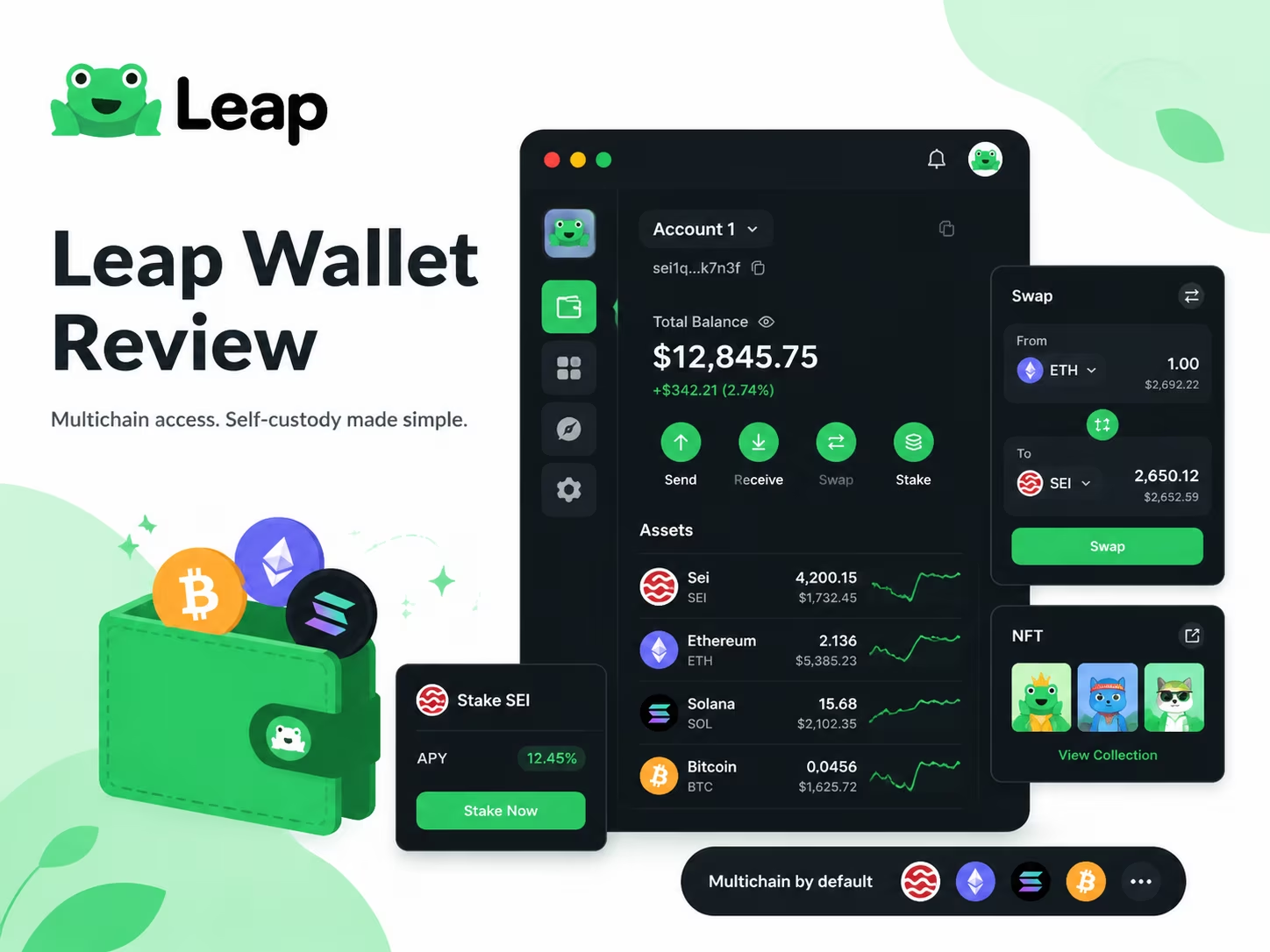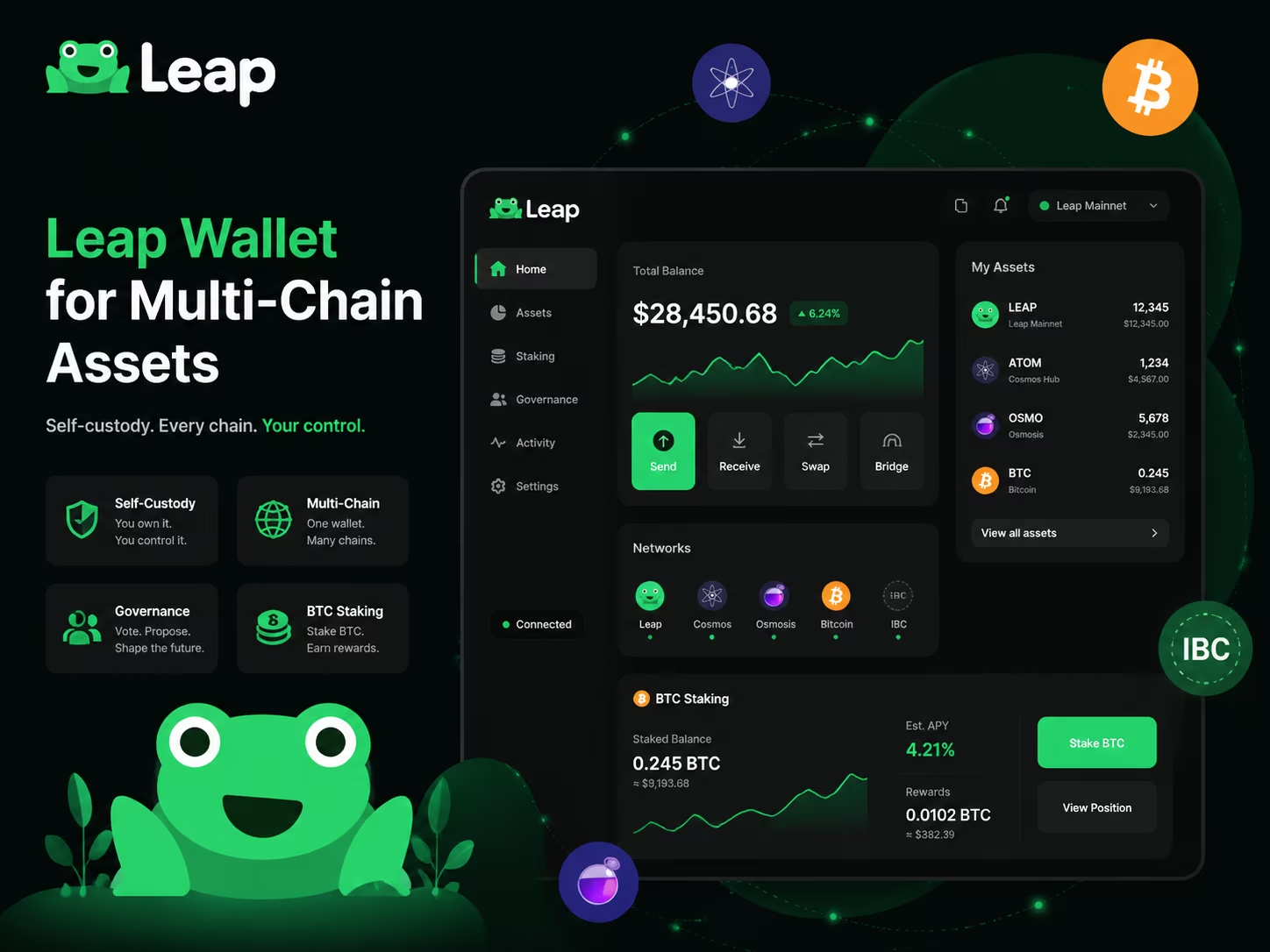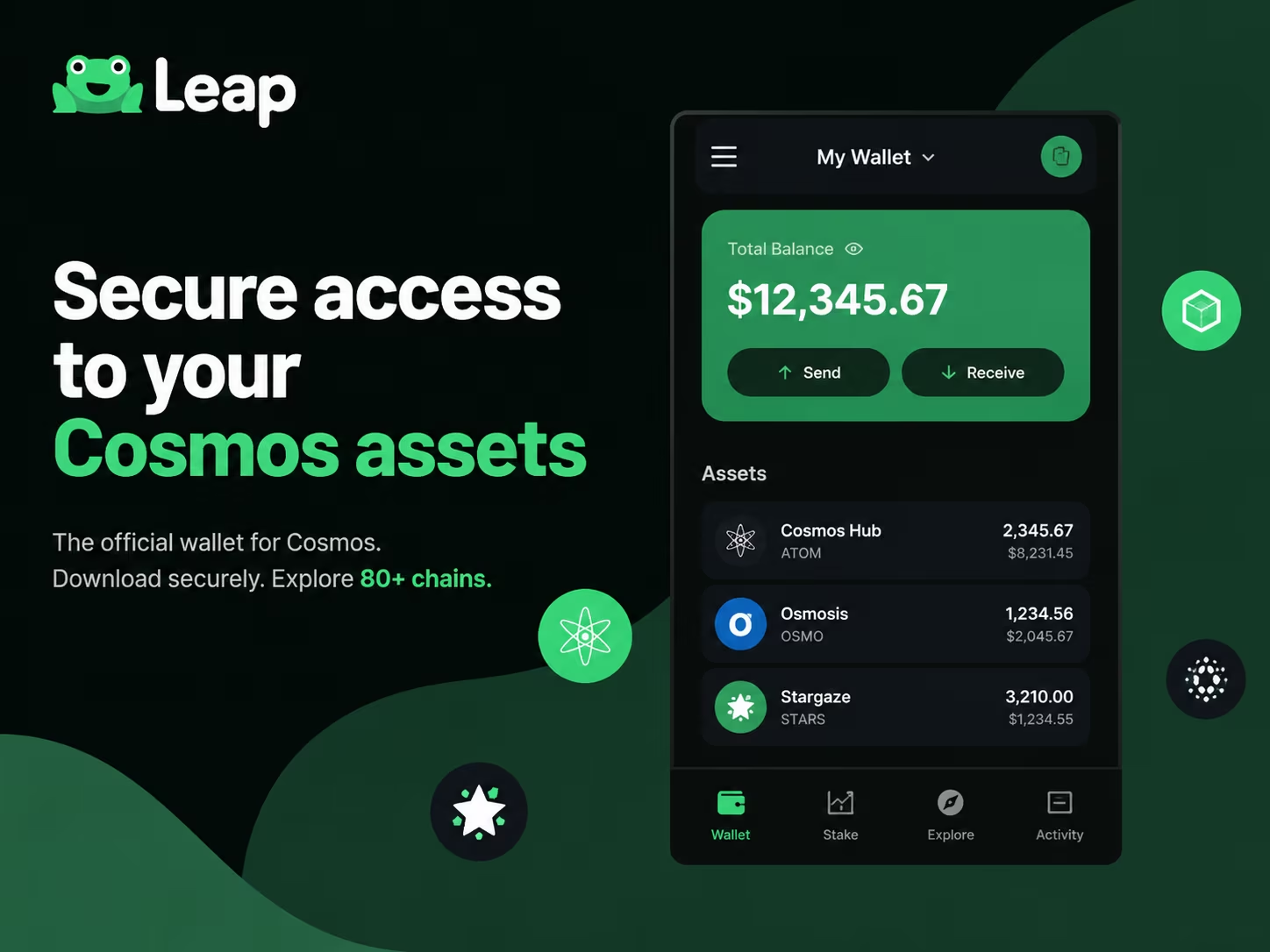
- Ecosystem Support: 80+ sovereign blockchain networks
- Staking Yields: 15% to 25% APY on ATOM/OSMO
- Transaction Costs: $0.005 – $0.10 average gas fees
- Security Standard: Non-custodial, No-KYC infrastructure
The official Leap Wallet website is your primary gateway for secure Cosmos ecosystem management, offering verified downloads and native support for over 80 sovereign chains. By using the authorized domain, you bypass high-risk phishing ads and third-party mirrors that compromise private keys. Accessing the site ensures you receive the latest firmware with integrated cross-chain bridging and real-time staking tools.
What Users Should Expect From the Official Leap Wallet Site
The official Leap Wallet site is your single most reliable starting point — downloads, documentation, verified access to every tool across 200+ supported networks, all in one place. Setting up a crypto wallet without checking the source is how people get burned. Phishing domains. Fake extension pages. Cloned UIs designed to drain you the moment you paste a seed phrase. Going straight to official channels eliminates that entire threat surface. Browser extension via the Chrome Web Store? It’s there. iOS or Android app? Linked directly. Web dashboard? Same deal. No guesswork, no third-party middlemen, no risk.
The Leap Wallet Documentation covers the full technical scope of what this wallet actually handles — Bitcoin, EVM-compatible networks, Solana, Cosmos SDK chains, Celestia, and more. IBC transfers, staking flows, NFT management, governance participation, WalletConnect v2 integrations with DEXs like Osmosis and Uniswap. All of it documented with step-by-step guides organized by use case, not buried inside generic FAQ walls. That structure matters. A team that maintains tight, organized documentation is a team that’s actively building — and expects users to operate in genuinely complex onchain environments without hand-holding.
For anyone who wants to see how these capabilities connect in practice, the Leap Wallet features guide breaks down the product logic in real depth. One thing that immediately stands out: the unified portfolio view. One balance snapshot across every connected chain, no app-switching, no network juggling. The Chrome Web Store listing confirms it — Cosmos, EVM, Solana, Bitcoin, all inside a single interface. That’s not a minor convenience. For anyone managing assets across fragmented ecosystems, that’s the whole game.
Here’s the bottom line. Official Leap Wallet resources give you the clearest, most accurate picture of what the product does — not what some outdated review claimed six months ago. The documentation portal, app store listings, and the web dashboard all reflect where the product actually stands right now. New user deciding whether to commit? Start with the official site. Partner evaluating integration options? Same answer. That’s where the real product lives — current, verified, and built for the kind of active Web3 usage that demands more than a basic single-chain wallet.
Official Leap Wallet Website Resources at a Glance
Navigating the Web3 ecosystem in 2026 requires a clear understanding of where to find verified tools. Using official resources is the only way to ensure your private keys and assets remain under your control. Whether you are looking for a Leap Wallet setup guide or technical specifications, the following table breaks down the essential entry points for the Leap ecosystem.
| Resource Type | Key Purpose | Safest User Action |
|---|---|---|
| Official Documentation | Technical guides & API | Verify multi-chain support details |
| Leapboard Dashboard | Portfolio tracking | Monitor assets across 200+ networks |
| Browser Extensions | Desktop Web3 access | Install only from official store links |
| Mobile Apps | iOS & Android management | Download via official website redirects |
| Hardware Support | Cold storage integration | Connect Ledger for maximum security |
How the Leap Wallet Website Supports a Modern Web3 Experience
The Leap Wallet website is your single verified entry point for downloading, understanding, and actively using one of the most capable Web3 wallets built for multi-chain environments. Self-custody means real assets on the line. Where you install from and what documentation you trust shapes your security from day one. The official site cuts through the noise — verified download links, accurate feature descriptions, direct support access, no cross-referencing sketchy third-party sources that haven’t been updated since last cycle.
As a non-custodial Cosmos wallet, Leap Wallet is built on one principle: your keys, your control, full stop. The website makes this architecture legible. It explains how IBC transfers actually work, which chains plug in natively, and how the wallet connects to dApps across the Cosmos ecosystem and beyond. According to Leap Wallet Documentation, the product covers multi-chain integrations, seamless IBC transfer flows, and chain registry protocols — the structural backbone of any serious Web3 interface. That level of technical transparency matters enormously before you commit to any wallet infrastructure. Onchain environments keep getting more complex. The cost of a wrong installation keeps going up.
The feature set documented on the official site goes far beyond basic send-and-receive. Staking tools. Governance participation. Cross-chain swaps. NFT management. Browser extension functionality. All of it in one place, clearly mapped out. Why does that matter? Because fragmented information scattered across forums and social channels breeds confusion about what the wallet actually supports — and confused users make bad decisions. The official website functions as a trust anchor: here’s what the product does, here’s how to use it correctly. For investors evaluating the ecosystem and developers building integrations, that kind of structured product clarity signals a mature, actively maintained project. Not a hobby build.
Brand trust and UX clarity are hard competitive advantages in Web3 right now. Users are more cautious than they were three years ago. Regulators are paying closer attention. The bar for what qualifies as a «reliable» wallet has moved significantly. Leap Wallet’s official site meets this moment directly — product information stays current, documentation links are audited, and access to the mobile app, browser extension, and developer resources is straightforward rather than buried. If you’re onboarding into the Cosmos ecosystem or expanding a multi-chain setup, starting from the official site isn’t just good hygiene. It’s the only rational baseline for making informed decisions about where your assets actually live.
How to Verify You Are on the Official Leap Wallet Website
In the 2026 Web3 environment, phishing attacks have become highly automated, making it harder to distinguish fake sites from the real ones. To ensure Leap Wallet secure access, you must follow a strict verification protocol before interacting with any download links or connecting your existing assets. Use this checklist to confirm you are using a trusted source.
- Inspect the domain name character by character. Scammers often use «homograph attacks» where letters from different alphabets look identical to English ones. Always manually type the address or use a bookmark you have previously verified.
- Verify the SSL certificate and connection security. Click the lock icon in your browser address bar. A secure connection is the bare minimum, but remember that modern phishing sites also use HTTPS to mimic legitimacy.
- Cross-check the download path. Official downloads should lead you directly to the Chrome Web Store, Apple App Store, or Google Play Store. If a site asks you to download a raw .exe or .apk file directly from the browser, leave immediately. Unofficial downloads are the primary vector for clipboard hijackers and multi-vector phishing risks as noted by ESET Security Media.
- Validate social proof and community links. Check the project’s official X (Twitter) profile or Discord. The follower count and engagement levels should match a major Web3 product. If the «official» site links to a Telegram group with only a few hundred members or disabled comments, it is likely a fraud.
- Audit the support and documentation pages. Genuine Web3 teams invest heavily in comprehensive documentation and clear UX. Fake sites often have broken links, spelling errors, or «Support» buttons that immediately ask for your 12-word recovery phrase. For more details on protecting your assets, refer to our Leap Wallet safety guide.
Why Official Downloads Are Safer Than Third-Party Sources
Go straight to the official Leap Wallet website or the verified Chrome Web Store listing — that single decision eliminates the most dangerous attack surface in crypto before you even open the app. Phishing operations targeting wallet users have reached a new level of precision heading into 2026. Attackers clone entire product sites, replicate UI down to the pixel, and push fake browser extensions that are visually indistinguishable from the real thing. A counterfeit build can silently swap your clipboard address, intercept seed phrase input, or reroute a signing request — all while looking completely normal. You won’t see it happening. That’s the design.
According to ESET Security, clipboard hijackers and multi-vector phishing schemes are almost exclusively delivered through unofficial wallet downloads. The playbook never changes: someone searches for a wallet, clicks a lookalike domain boosted by paid ads or SEO manipulation, downloads a modified build, and loses funds within hours. The wallet functions perfectly — that’s the whole point. The malicious layer runs silent underneath. Verifying your source before any Leap Wallet install isn’t a recommendation. It’s the floor.
Third-party sources introduce three specific risks that official channels simply don’t carry: tampered binaries with injected code, outdated builds missing current security patches, and zero update integrity verification. Installing from the official Leap Wallet website or a Chrome Web Store listing linked directly from it gives you a signed package, a verified publisher identity, and automatic updates through a trusted pipeline. A random GitHub fork, a Telegram file share, an unofficial APK mirror — all of that bypasses every protection. For a detailed breakdown of what makes official distribution trustworthy, the Leap Wallet safety guide walks through the key verification steps.
The practical rule is brutally simple. Before installing anything: confirm the URL matches the official domain character-for-character, cross-check the extension ID in the Chrome Web Store against what the official site lists, and never — under any circumstances — install a wallet file sent to you directly, even from someone claiming to be support staff. With multi-chain activity expanding and more assets flowing through browser wallets, a compromised install costs more than ever. Official sources aren’t just good practice. They’re the only rational starting point.
Leap Wallet Access Options and What to Check Before Installing
Choosing the right interface for your assets depends on your workflow. While the browser extension is the standard for interacting with desktop dApps, the mobile app provides essential on-the-go management with high user trust ratings. Before you begin, follow our Leap Wallet setup guide to ensure your recovery phrase is handled securely.
| Feature / Option | Browser Extension | Mobile App |
|---|---|---|
| Supported Platforms | Chrome, Edge, Brave | iOS, Android (Google Play) |
| Network Support | Cosmos, EVM, Solana, BTC | Cosmos, EVM, Solana, BTC |
| Primary Use Case | Desktop dApp interaction | Portfolio tracking & mobile swaps |
| Hardware Security | Ledger (Cosmos App) | Bluetooth Ledger support |
| Verification Check | Official Store Developer ID | 4.7 stars / 100k+ downloads |
Connect your wallet
To manage your assets across supported blockchain ecosystems and interact with Web3 dApps securely, use the local Leap Wallet connection flow.
Connect WalletLeap Wallet Website, Self-Custody, and the US User Perspective
Self-custody wallets occupy a legally distinct space in the US — and that distinction directly shapes where you should be getting your wallet software. As a non-custodial Cosmos wallet, Leap never touches your private keys. Your seed phrase lives with you. Your assets answer to no one but you. That model puts Leap in a regulatory category that looks nothing like an exchange or a custodial platform — and for US-based users navigating an increasingly tangled compliance landscape, that gap matters enormously.
The Trust Wallet Blog laid it out clearly: 2025 regulatory frameworks in the US and globally have reinforced KYC exemptions for unhosted, self-custody wallets. No identity verification just to use your own tool. That’s a concrete, practical win. But it also raises the stakes around one specific question — where exactly did you download your wallet? Because self-custody means no intermediary to reverse a bad transaction or flag a compromised install. The source of your software becomes your first line of defense. Full stop. A fake or modified app can drain everything before you even notice something went wrong.
This is precisely why the Leap Wallet official website and its verified distribution channels carry so much weight for US users. The Chrome Web Store extension, the iOS App Store build, the Google Play release — these are the only places where you can be confident you’re running unmodified, audited software. Phishing sites mimicking wallet interfaces have grown brutally sophisticated, with some cloning entire UI flows specifically to capture seed phrases at the moment of wallet creation. That’s not a hypothetical threat. Verifying you’re on the real Leap Wallet official app page isn’t paranoia — it’s the bare minimum of operational security for anyone managing real onchain assets.
For US users, the combination of regulatory clarity around self-custody and a thriving Cosmos ecosystem makes Leap a genuinely practical choice. IBC-enabled chains, staking, governance participation, cross-chain swaps — all from one interface. Powerful stuff. But none of it means anything if your starting point is a compromised install. Use the official website to verify links, review version history, and reach support resources directly. That’s not a formality. That’s the foundation everything else is built on.
Expert View on Trust Signals for Wallet Websites
The domain you land on when searching for the Leap Wallet official site is the first and most consequential trust signal in your entire Web3 setup. Multichain activity, cross-chain bridges, DeFi integrations — every one of these expands your attack surface. And experts keep returning to the same baseline: start from the official website, verify the URL manually, and never install a wallet extension or mobile app from a third-party source. Not paranoia. Basic hygiene for anyone with real assets onchain.
According to ESET Security Media, unofficial wallet downloads carry multi-vector phishing risks, clipboard hijacker mechanics, and a range of silent vulnerabilities that can drain your funds before anything looks wrong. The attack pattern is almost insultingly simple: a fake site mirrors the real product, serves a modified installer, and the malicious build captures your seed phrase or quietly redirects your transactions. The official website breaks this chain entirely. It’s the one place where you can confirm you’re getting the real binary, the real extension ID, and the real support contacts. Leap Wallet app verification starts here — not in a Telegram group, not in a search ad, not from a link someone DM’d you.
From a product trust perspective, the official website does far more than host a download button. It signals that the team is active, the product is maintained, and there’s a real accountability structure behind the brand. For a wallet operating across Cosmos, EVM, and adjacent ecosystems, that continuity matters more than most users realize. Cross-reference the app version listed on the site against what’s published in the App Store or Chrome Web Store. Numbers match? You’re good. They don’t? Stop and investigate before you touch anything. This kind of Leap Wallet app verification takes under two minutes and eliminates an entire category of risk. For a sharper look at how the product handles multichain functionality and what the feature set actually delivers in practice, the Leap Wallet review breaks it down clearly.
The practical checklist is short. Non-negotiable. Bookmark the official domain directly after your first verified visit. Enable two-factor authentication on any linked accounts. Treat every unsolicited wallet download link as a red flag — regardless of who sends it. In 2026, AI-generated phishing pages can replicate a brand’s visual identity with uncomfortable precision. The only reliable defense is a habit: go back to the source you already verified. A trusted Leap Wallet site gives you that anchor point. Use it every time — not just the first time.
What Costs to Expect When Using Leap Wallet
Leap Wallet costs you nothing to download — no license fee, no subscription, no paywall between you and the interface, whether you’re running the browser extension or the mobile app. That’s the whole story on pricing before we go any further. The software itself is free. What you actually pay for are on-chain actions: every transaction broadcast to a blockchain network requires a gas fee, and every cent of that goes to network validators — not to Leap Wallet. The wallet is just the instrument you use to sign and send. Nothing more.
Gas fees are a network reality, not a product decision. On Cosmos-based chains, they’re almost laughably small — fractions of a cent, by design, because the architecture prioritizes throughput and efficiency. On Ethereum or EVM-compatible networks, that math changes fast. During high-traffic periods, a single transaction can cost several dollars. Leap Wallet shows you estimated fees before you confirm anything, so there’s no ambush mid-flow. Swaps routed through integrated DEX aggregators may carry a small protocol-level fee folded into the exchange rate — but again, that’s a network and protocol cost, not a Leap Wallet charge. The mental model that actually saves you money: wallet software and on-chain execution are two completely separate things.
Want the full picture of what you get for free? The Leap Wallet features guide breaks it all down — multi-chain support, staking interfaces, NFT management, portfolio tracking, cross-chain bridging tools. None of it sits behind a paid tier. The business model is clean: Leap Wallet earns through aggregated swap volume and ecosystem partnerships. Not from charging users for access. That alignment matters — the product improves as usage grows, and you don’t write a check to unlock core functionality.
Here’s the practical rule before you do anything on-chain — staking, swapping, bridging, sending tokens. Check the estimated gas fee in the interface first. On low-fee chains like Cosmos Hub or Osmosis, this is barely a consideration. On higher-fee networks, timing is leverage: fees drop during off-peak hours, and waiting costs nothing. Always keep a small reserve of the native gas token on every chain you actively use. Without it, your assets sit frozen — not because of any wallet limitation, but because that’s how every blockchain operates. Learning this early spares you the very specific frustration of holding assets you temporarily can’t touch because your gas balance quietly hit zero.
Conclusion
The official Leap Wallet website is your single most reliable starting point for downloads, setup, and support — and nothing in the current onchain landscape changes that. Phishing domains, counterfeit app clones, and unofficial builds are not theoretical risks anymore. They are active, they are targeted, and they are getting more convincing every month. Going straight to the verified source kills that threat before it ever touches your assets.
For the actual Leap Wallet download, the official site does something app stores simply cannot: it gives you version history, release notes, and a direct line to cross-check what you’re installing against what the team actually shipped. That’s not a minor detail. When you’re managing assets across Cosmos, EVM, and every other supported network the wallet covers, you need setup documentation that reflects what the product does right now — not three updates ago. The official site keeps that documentation current. And if you want a hands-on walkthrough from install to first transaction, the Leap Wallet setup guide handles the full process in clear, practical steps.
There’s a product logic angle here worth taking seriously. The website is where the team actually communicates — new feature rollouts, updated chain integrations, anything that changes how the wallet behaves. Users running on unofficial sources or cached documentation hit the same friction points over and over: wrong RPC endpoints, deprecated UI flows, missed security patches. It’s a slow, grinding way to manage a wallet. The official site removes that friction entirely. One authoritative source, always current.
First-time user or seasoned Web3 operator — it doesn’t matter. Start at the official website. Download from there. Read the docs from there. Reach support from there. That’s not ceremony. That’s the lowest-risk, highest-clarity path available, and it protects both your assets and your time from the very first click.
Import your old wallet
Switch to a more efficient on-chain experience. Import your existing seed phrase to Leap and start managing your assets, staking, and dApp connections with a superior browser extension interface designed for 2026 security standards.
Connect WalletLeap Wallet Pillar Cluster
This support article covers official Leap Wallet website access, safe downloads, and trust checks for the Leap Wallet cluster.
Educational content only. Non-custodial wallet users are responsible for seed phrase backup, transaction review, dApp permissions, taxes, and network fees. Nothing here is financial, legal, or tax advice.
Frequently Asked Questions
Where is the safest place to download Leap Wallet?
The safest place to download Leap Wallet is directly through the official website, which links to verified listings on the Chrome Web Store, Apple App Store, and Google Play Store. Installing from any other source exposes you to tampered binaries and phishing risks.
Does Leap Wallet charge a subscription or license fee?
No. Leap Wallet is completely free to download and use across both the browser extension and mobile app. The only costs you encounter are standard blockchain gas fees paid to network validators, not to Leap Wallet itself.
How many blockchain networks does Leap Wallet support?
Leap Wallet supports over 200 networks, including Cosmos SDK chains, EVM-compatible networks, Solana, and Bitcoin, all manageable from a single unified portfolio dashboard without manual RPC configuration.
Why does it matter which website I use to access Leap Wallet resources?
The official Leap Wallet website is the only source that guarantees verified download links, current documentation, and accurate feature information. Third-party mirrors and lookalike domains are primary vectors for clipboard hijackers, seed phrase harvesting, and modified wallet builds.
Do US users need to complete KYC to install or use Leap Wallet?
No. As a non-custodial wallet, Leap Wallet does not hold your private keys and is exempt from Money Services Business classification under FinCEN and BSA guidelines, meaning no identity verification is required at the point of software installation.
Crypto Wallet Research and Product Education
Leap Wallet Editorial Team
The Leap Wallet editorial team reviews wallet setup flows, self-custody risks, staking workflows, dApp permissions, and multi-chain asset management patterns for educational Web3 guides.
Hands-on coverage of non-custodial wallet setup, browser extension UX, mobile wallet workflows, Cosmos staking, IBC transfers, and dApp connection safety.
Wallet Safety Fact Check
Leap Wallet Security Review
Reviewed for seed phrase guidance, dApp permission risk, fee language, self-custody caveats, and local link integrity.